Acne scars change the way light hits your skin
For selected depressed acne scars and uneven texture, a series of microneedling treatments may help soften visible irregularities over time.
 SUPRAFAMILY AND WELLNESS CLINICBook Your PRP Facial Consultation
 When acne scars, rough texture, enlarged-looking pores, or fine lines keep your skin from looking as smooth as you want, PRP microneedling offers a gradual, collagen-focused approach—planned around your skin, not a filter.
Watch how controlled microneedling is performed in a clinical setting. Before treatment, topical anesthetic is applied and allowed time to numb the skin to minimize discomfort. Individual treatment depth, recovery, and results vary.
Microneedling creates controlled micro-injuries that prompt the skin's natural repair response. PRP is prepared from your own blood and may be incorporated into an individualized rejuvenation plan. The goal is progressive improvement in skin quality—not instant volume or an overnight transformation.
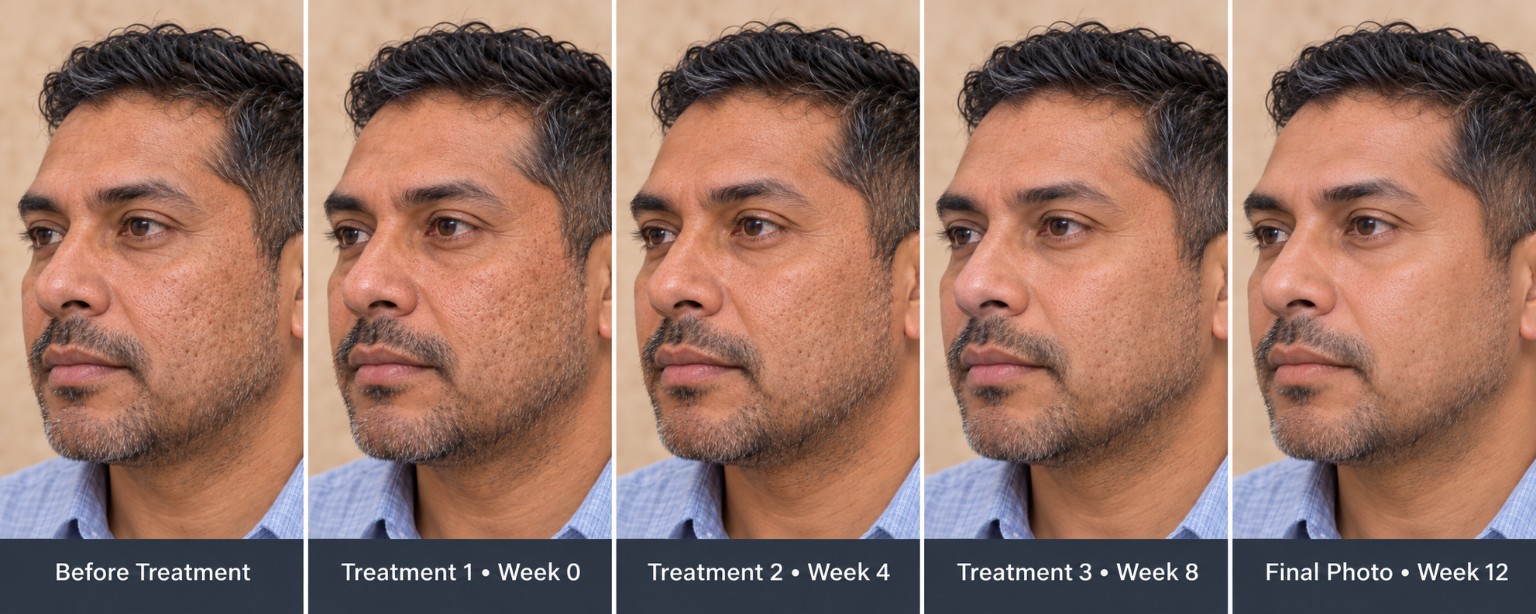
For selected depressed acne scars and uneven texture, a series of microneedling treatments may help soften visible irregularities over time.
Improved surface texture and firmness can make enlarged-looking pores appear less prominent, though pores cannot be permanently erased.
A collagen-remodeling plan may help improve overall texture and support a smoother, healthier-looking surface as healing progresses.
Microneedling may soften the appearance of selected fine lines by supporting gradual skin remodeling. Deep wrinkles may need another approach.
PRP microneedling focuses on skin quality. It does not work like filler and is not intended to change the shape of your face.
Your pigment history, scar pattern, sensitivity, and risk factors guide treatment depth, spacing, preparation, and aftercare.
That is exactly what the consultation is for. We compare your main concern, desired recovery, skin history, and realistic options before recommending a treatment.
Book Your PRP Facial ConsultationIt makes the strongest case when the problem is texture—not facial volume, muscle movement, or significant skin laxity.
Your priority is acne-scar texture, roughness, enlarged-looking pores, fine lines, or gradual improvement in overall skin quality—and you can commit to aftercare and sun protection.
Your main concern is lost cheek or lip volume, dynamic forehead or frown lines, significant laxity, active acne, deep pigmentation, or a condition that needs diagnosis before cosmetic treatment.
A treatment series may be recommended for texture or acne-scar concerns. This example shows three treatments spaced four weeks apart, with the final comparison at week 12. Your schedule and response may differ.
Individual results vary. Images illustrate a possible progression and do not guarantee your outcome. Treatment selection, depth, number of sessions, healing, and results vary.
We review your concern, skin and scar history, medications, healing, prior procedures, medical conditions, and treatment goals.
The skin is cleansed, then a topical anesthetic is applied and allowed time to numb the treatment area so discomfort is minimized during microneedling. A small blood sample is collected when PRP is included.
The microneedling depth and passes are selected for the treatment area. PRP is prepared and used according to the individualized protocol discussed during consent.
You leave with specific instructions for gentle skincare, sun protection, product restrictions, warning signs, and follow-up.
Expected effects can include redness, warmth, tightness, pinpoint bleeding, sensitivity, dryness, bruising, or swelling. Less common risks can include infection, pigment change, scarring, prolonged irritation, or an unsatisfactory result.
Tell us about active acne or infection, cold sores, eczema or psoriasis flares, abnormal scarring, bleeding or platelet disorders, anticoagulants, immune conditions, recent procedures, pregnancy or breastfeeding, and all medications and supplements.
Not every patient needs PRP, and not every patient is a candidate for microneedling.The FDA states that microneedling devices have not been cleared for delivering PRP into the skin. If combination treatment is considered, the rationale, alternatives, uncertainties, risks, and consent are discussed before you decide.
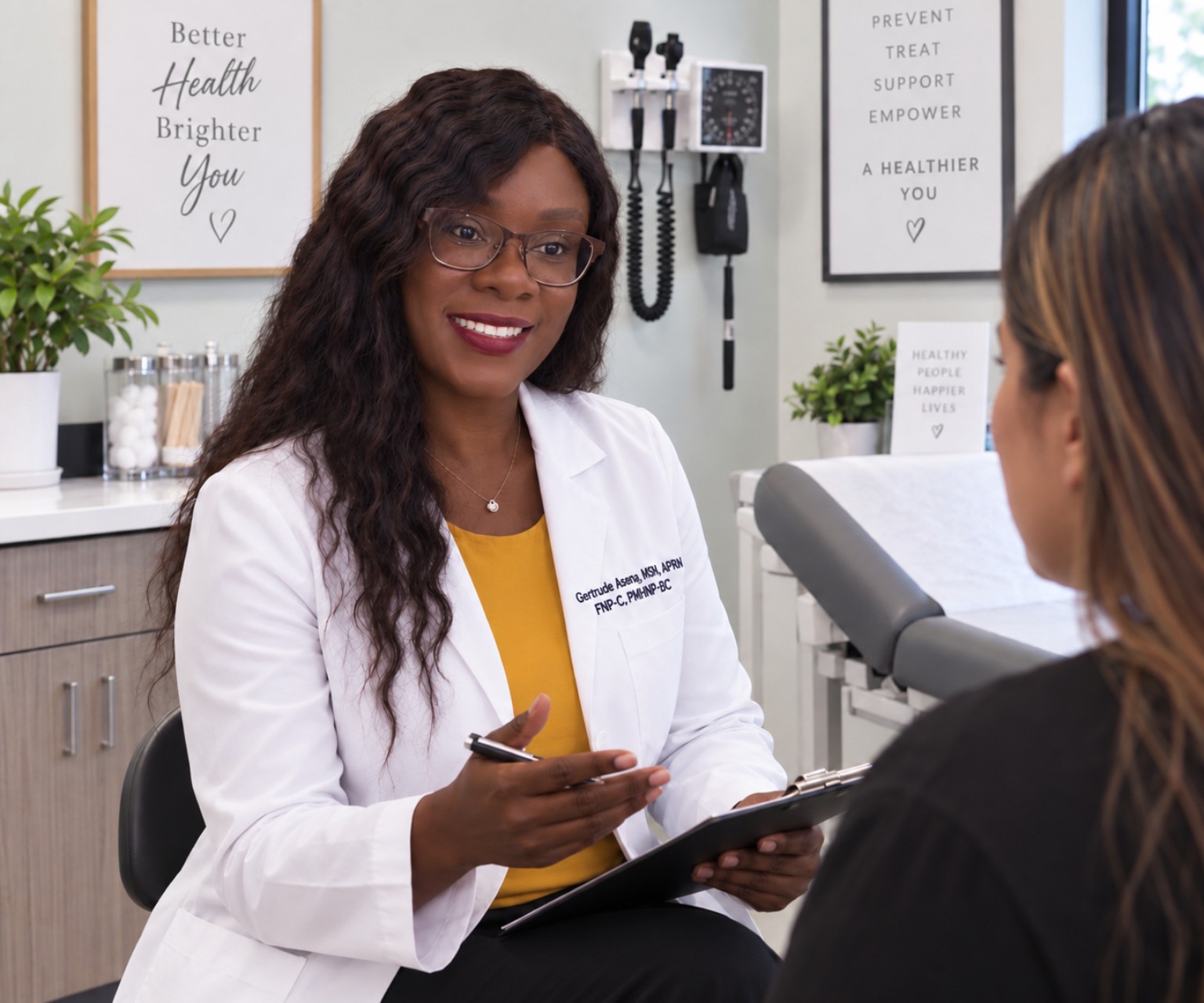
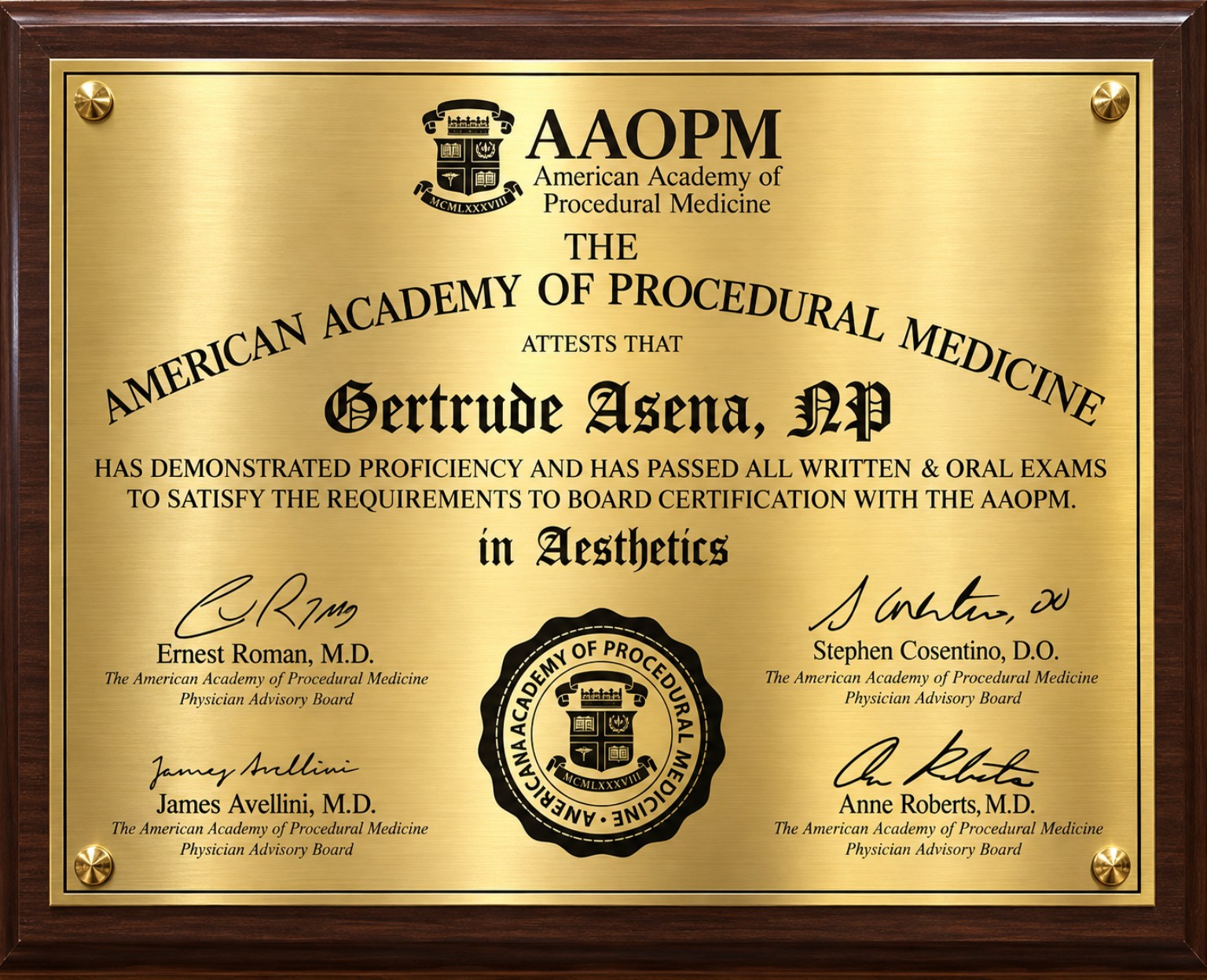
Gertrude Asena is an experienced nurse practitioner certified in aesthetics by the American Academy of Procedural Medicine. Her approach begins with the condition of your skin, your medical history, and the result you want—not a preset package.
You receive a candid recommendation about whether microneedling alone, PRP microneedling, a chemical peel, another approach, or no treatment is the most reasonable next step.
Understand the treatment, recovery, limitations, and alternatives before you book.
A PRP facial combines microneedling with platelet-rich plasma prepared from a small sample of your own blood. Microneedling creates controlled microchannels, while PRP is used as part of the treatment protocol. Your consultation determines whether microneedling alone or a PRP-based plan is appropriate.
It may improve the appearance of acne-scar texture, roughness, enlarged-looking pores, fine lines, and overall skin quality. It is not a facelift, does not replace lost facial volume, and cannot remove every scar or wrinkle.
PRP is sometimes added to support the healing and rejuvenation plan, but it is not automatically necessary for every patient. Evidence, goals, skin condition, cost, and clinical suitability should all be considered before choosing the combination.
A series is often considered for texture or acne-scar concerns. A common plan may space treatments about four weeks apart, but the number and timing must be individualized. Improvement develops gradually as the skin remodels.
Before microneedling, a topical anesthetic is applied and allowed time to numb the treatment area. This is intended to minimize discomfort during the procedure. You may still notice pressure, vibration, warmth, or brief sensitivity in certain areas, and individual comfort levels vary.
Redness, warmth, tightness, pinpoint bleeding, sensitivity, dryness, or mild swelling can occur. These effects often settle over several days, but recovery varies with treatment depth, skin response, and aftercare.
Microneedling may be considered across a range of skin tones because it does not rely on heat, but irritation can still trigger pigment changes. Conservative settings, sterile technique, aftercare, and sun protection remain important.
Treatment may not be appropriate with active infection, open skin, an active inflammatory breakout, certain blood or platelet disorders, uncontrolled medical conditions, abnormal scarring history, some medications, pregnancy-related considerations, or recent procedures. A complete history is required.
The FDA regulates microneedling devices for specific intended uses. It states that microneedling devices are not cleared for delivery of PRP into the skin. If PRP is considered, its use, alternatives, uncertainties, and potential risks should be discussed during informed consent.
Visit Supra Family and Wellness Clinic at 25422 Aldine Westfield Road, Spring, TX 77373. We welcome patients from Spring, The Woodlands, Humble, Tomball, Conroe, Cypress, and nearby North Houston communities.
Services require individual evaluation and informed consent. Results, recovery, risks, and suitability vary. Medical content reviewed September 2026.