Dull, tired-looking skin
When buildup makes the complexion look flat, a superficial peel may help refresh the surface and restore a brighter appearance.
 SUPRAFAMILY AND WELLNESS CLINICBook Your Chemical Peel Consultation
 A personalized chemical peel can help reveal smoother, brighter, more even-looking skin. At Supra Family and Wellness Clinic, your treatment begins with your concern, skin tone, history, and tolerance for downtime—not a one-peel-fits-all menu.
Chemical peels create controlled exfoliation at a selected depth. As treated surface cells shed and the skin heals, the complexion may appear smoother, brighter, and more even. The right peel depends on what you want to improve and how your skin is likely to respond.
When buildup makes the complexion look flat, a superficial peel may help refresh the surface and restore a brighter appearance.
A carefully selected peel may improve the appearance of selected discoloration and post-acne marks. Pigment risk must be considered—especially in deeper skin tones.
Controlled exfoliation can help the skin feel smoother and make surface irregularities and pores appear less noticeable.
Some peels can soften the appearance of fine surface lines and visible sun damage. Deep wrinkles and skin laxity need a different conversation.
Certain peel ingredients may be considered for selected acne patterns, congestion, and marks left after breakouts. Active or inflamed skin requires careful evaluation.
A professional peel is selected by strength, depth, and skin concern. It can offer more targeted resurfacing than routine exfoliation, with preparation and recovery guidance.
You do not need to choose an acid or peel strength yourself. Show us what bothers you, and we will help determine whether a chemical peel—or another treatment—is the better fit.
Book Your Chemical Peel ConsultationA peel can be a strong option for surface tone and texture, but it is not automatically the best answer for every skin concern.
You are concerned about dullness, rough texture, selected dark spots, post-acne marks, mild surface irregularity, some types of acne, or fine lines—and you can follow sun-protection and aftercare instructions.
Your main concern is deep acne scarring, significant skin laxity, deep wrinkles, active infection, severely irritated skin, or a condition that requires diagnosis and treatment before cosmetic resurfacing.
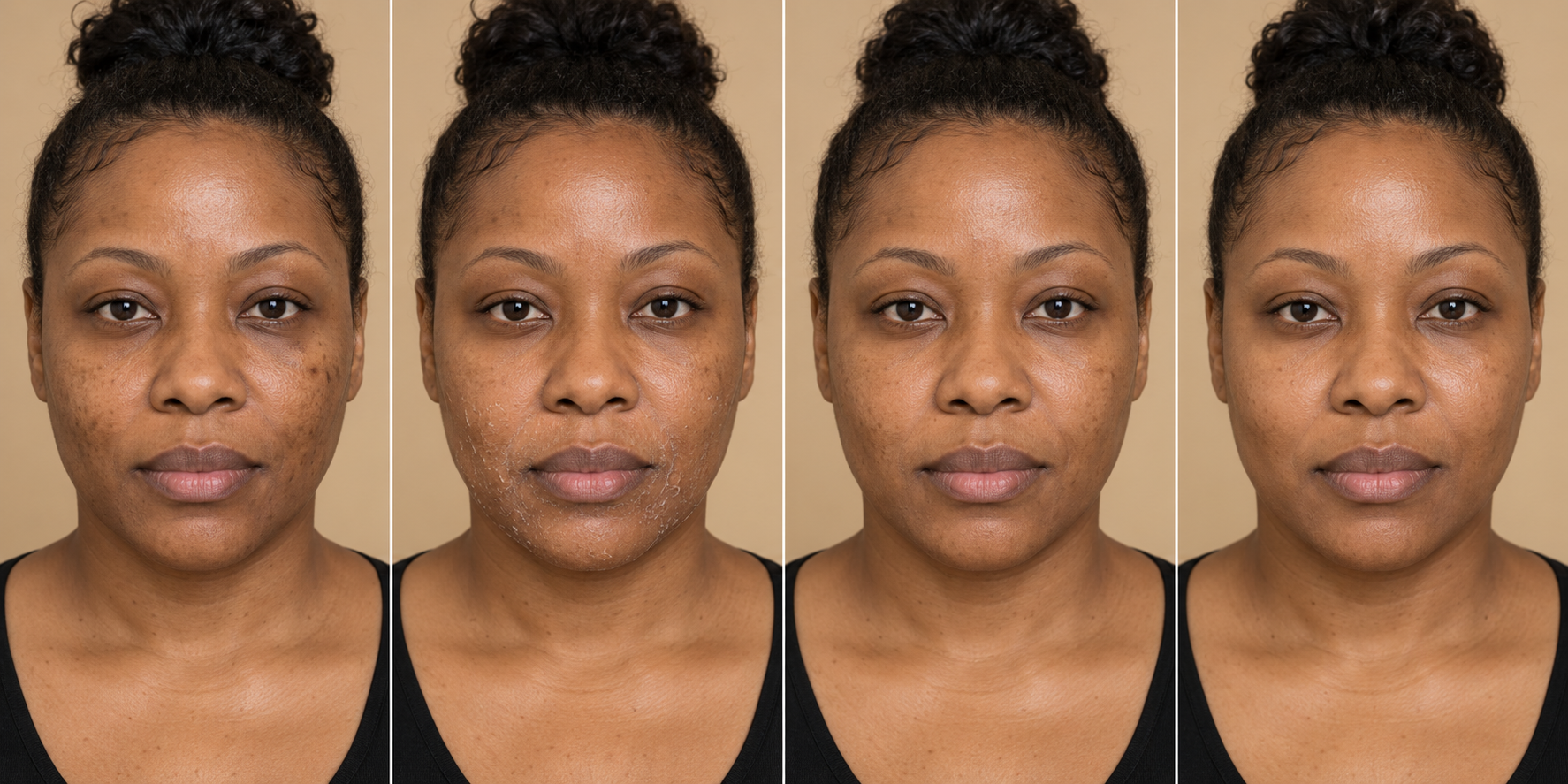
Early redness, tightness, dryness, flaking, or visible peeling may occur depending on the treatment. Improvement becomes clearer after the skin has healed. Never pick peeling skin; follow your aftercare plan and protect healing skin from the sun.
Individual results vary. This image illustrates a possible recovery pattern and does not predict your response. Timing and visible peeling depend on the peel used and individual skin.
Discuss your goals, skin sensitivity, pigment history, acne, medications, products, prior procedures, sun exposure, and upcoming events.
Your skin tone, barrier condition, active concerns, and risk factors are evaluated before a peel type or strength is recommended.
You may receive preparation instructions. If treatment is appropriate, the skin is cleansed and the selected solution is applied and monitored.
You leave with product-specific aftercare, sun-protection guidance, warning signs, and recommendations for follow-up or a treatment series.
Darker skin tones can be more prone to post-inflammatory hyperpigmentation after irritation or injury. That does not automatically rule out a chemical peel—but it makes thoughtful product selection, preparation, treatment depth, aftercare, and sun protection especially important.
Tell us about previous pigment changes, keloids or abnormal scarring, cold sores, recent tanning, active breakouts, retinoids, isotretinoin history, antibiotics, pregnancy or breastfeeding, and all recent skin procedures.
A consultation may lead to a peel, a gentler plan, pretreatment skincare, or a recommendation to postpone treatment.Potential effects include redness, stinging, dryness, swelling, flaking, temporary darkening or lightening, infection, scarring, or an unsatisfactory result. The risks vary with peel depth, skin characteristics, adherence to aftercare, and other factors.

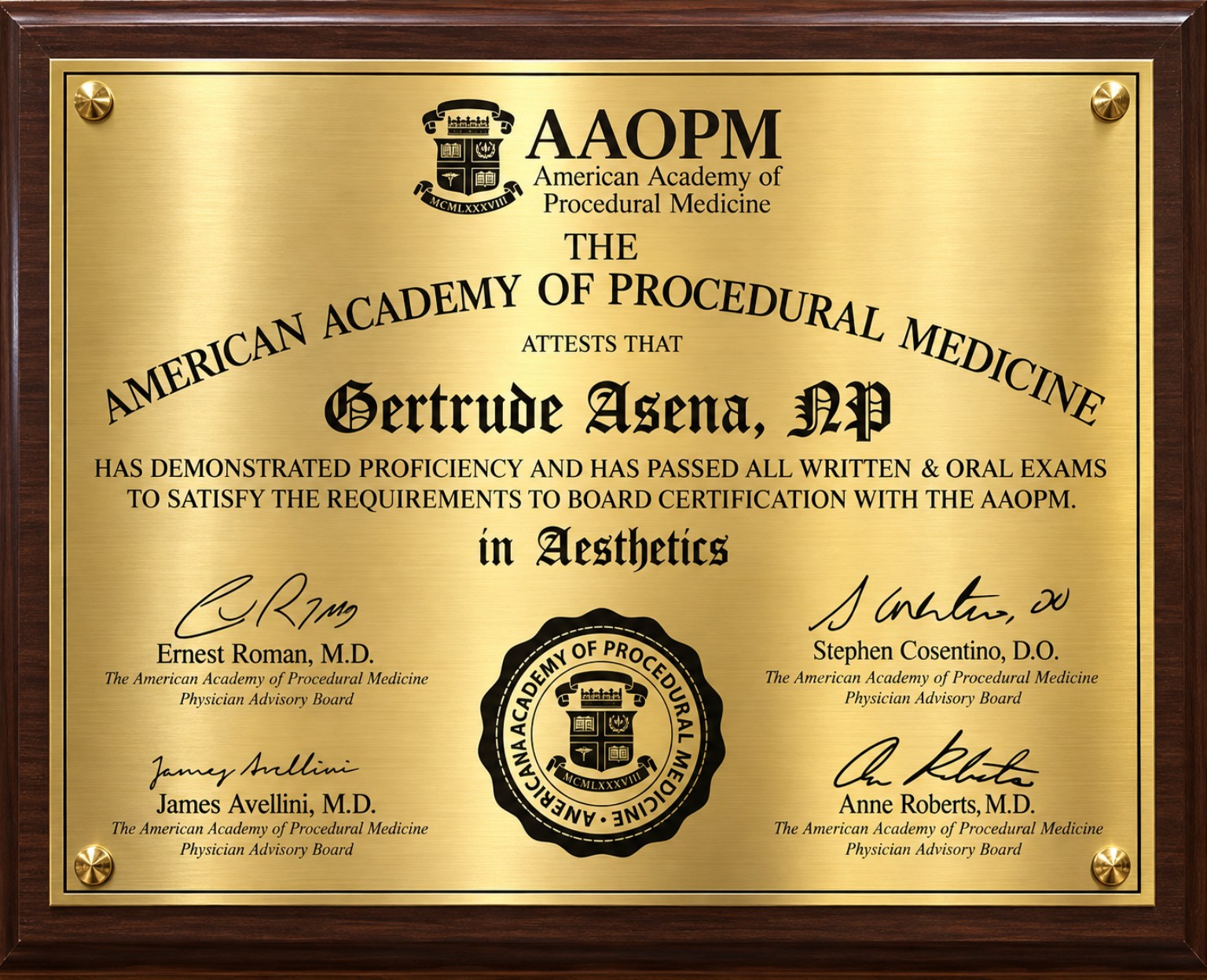
Gertrude Asena is an experienced nurse practitioner certified in aesthetics by the American Academy of Procedural Medicine. Her approach connects aesthetic goals with a careful review of skin history, medications, sensitivities, and clinical suitability.
Your visit is designed to answer the practical questions: what can realistically improve, which treatment fits your skin, what recovery may look like, and how to protect your result.
Clear answers help you decide whether a peel fits your skin, schedule, and goals.
A chemical peel is a skin-resurfacing treatment that applies a carefully selected solution to the skin. It loosens damaged surface cells so they can shed as the skin renews. Peel depth, ingredients, expected flaking, and recovery depend on the product and your individualized plan.
Depending on the peel selected, treatment may improve the appearance of dullness, rough texture, uneven-looking tone, selected dark spots, some types of acne, post-acne marks, and fine lines. Chemical peels do not correct every concern, and deeper scars or significant laxity may require another approach.
Possibly. Some superficial peels cause little visible shedding, while others cause dryness, tightness, flaking, or peeling for several days. The amount of peeling does not reliably measure how well a treatment worked.
Chemical peels may be considered for a range of skin tones, but product choice, peel depth, preparation, sun exposure, and aftercare matter. Darker skin can be more prone to post-inflammatory pigment changes, so your skin history and risk factors must be assessed before treatment.
Downtime varies by peel. A light or superficial peel may cause redness, dryness, sensitivity, or flaking for several days. Stronger peels have longer recovery and greater risk. We explain the expected recovery for the specific peel before you decide.
Some people choose one treatment for a refreshed appearance; others may benefit from a series. The number and spacing depend on the concern, product, skin response, and treatment goal. Results are gradual and individual.
Follow your individualized instructions. In general, avoid picking or pulling flaking skin, harsh exfoliants, and unprotected sun exposure while healing. Use the recommended gentle skincare and sunscreen, and contact the clinic for unexpected pain, blistering, marked swelling, or worsening discoloration.
Treatment may need to be delayed for active infection, open or irritated skin, a recent procedure, significant sun exposure, certain medications, pregnancy-related considerations, a history of abnormal scarring, or other clinical factors. Share your complete skin, medication, and procedure history during consultation.
Visit Supra Family and Wellness Clinic at 25422 Aldine Westfield Road, Spring, TX 77373. We welcome patients from Spring, The Woodlands, Humble, Tomball, Conroe, Cypress, and nearby North Houston communities.
Services require individual evaluation and informed consent. Results, recovery, risks, and suitability vary. Medical content reviewed September 2026.